Cravat or Kravat? One Word, Two Cultures, and a Stylish History
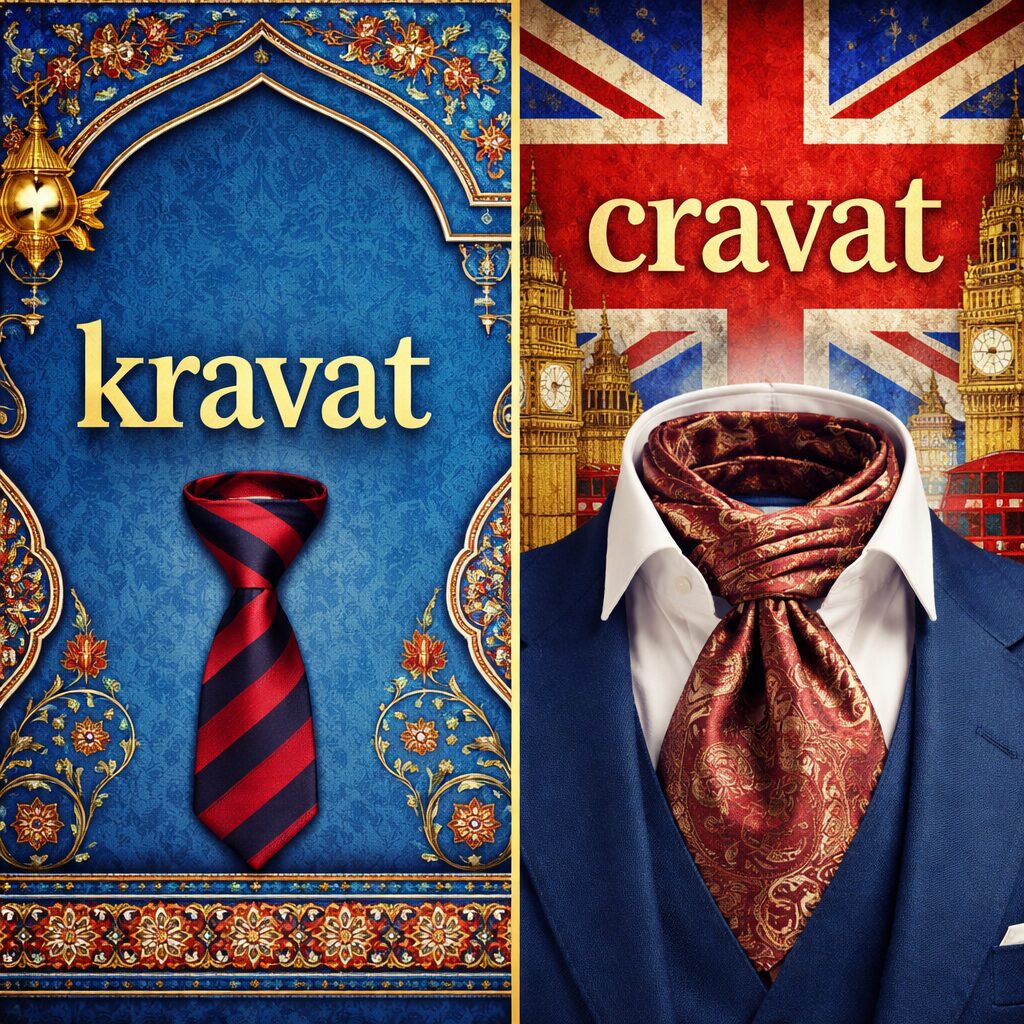
If you’re an English speaker traveling through Turkey, you might experience a moment of linguistic "deja-vu." You hear someone mention a "kravat" and wonder: Wait, did they just use an old-fashioned English word?
A Match Made in Fashion
In English, a "cravat" refers to a stylish, neckband-style necktie—the sophisticated ancestor of the modern tie. In Turkish, the word "kravat" means exactly that: a necktie. Unlike many "false friends" in linguistics, these two are actual cousins.
The Croatian Connection
This isn't a coincidence; it’s a journey through history. Both languages borrowed the term from the French word cravate. But the story goes deeper:
In the 17th century, Croatian mercenaries serving in France wore distinctive, brightly colored neckerchiefs.
The French were so charmed by the style that they named it after the wearers—"Hrvat" (Croat) became "Cravate."
From the courts of Paris, the trend (and the name) spread West to England and East to the Ottoman Empire.
Why It Matters
While "cravat" in modern English often feels a bit vintage or formal, "kravat" is the standard, everyday word for a necktie in Turkey. It’s a perfect example of how fashion can bridge the gap between different cultures and languages.