Topkapi Palace in Istanbul: From Ottoman Glory to Modern Tourist Gem
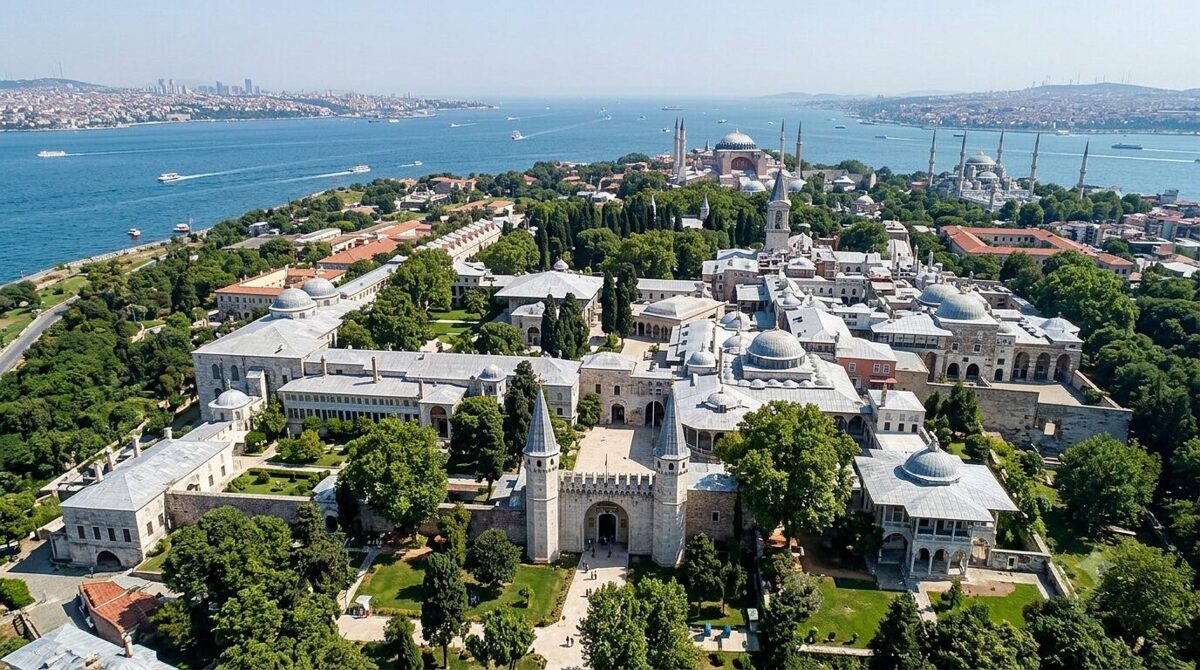
Imagine a place where, just a few centuries ago, decisions were made that changed the entire map of the world. A place where luxury met deep secrets, and behind high fortified walls lived sultans, their families, and thousands of servants. This is Topkapi Palace (Topkapı Sarayı) in Istanbul — one of the most famous, impressive, and historically rich palace complexes in the world.
Today, Topkapi is no longer a closed center of power, but one of the most visited museums in Turkey. How was this complex constructed, what is its impact on world history and culture, and why should you definitely include it in your travel bucket list? Let’s take a journey through the centuries.
How It All Began: Construction and the Heart of the Ottoman Empire
It all started in 1453 when the young and ambitious Ottoman Sultan Mehmed II the Conqueror captured Constantinople (present-day Istanbul), putting an end to the Byzantine Empire. He needed a grand new residence that would reflect the power and status of the new empire.
Construction began around 1459 at a strategically magnificent location — a peninsula offering breathtaking views of the Bosphorus Strait, the Golden Horn, and the Sea of Marmara. The palace was completed in 1478 and was initially called the "New Palace" (Yeni Saray). Later, it acquired the name Topkapi, which means "Cannon Gate" in Turkish, named after the seaside gate where large defensive cannons were located.
For nearly 400 years (from the 15th to the 19th century), Topkapi served as the beating heart of the Ottoman Empire. It was not merely a royal residence, but a massive, self-sufficient city within a city. During its peak, up to 4,000 people lived and worked inside the complex.
Architecture That Tells Stories: Structural Layout
Unlike many European palaces built as single massive buildings (such as Versailles), Topkapi Palace consists of separate pavilions, courtyards, gardens, and service buildings. The palace is divided into four main courtyards, becoming progressively more private and secure as you go deeper:
First Courtyard (Janissary Courtyard): Open to the general public. It housed storehouses, bakeries, and even the ancient Byzantine church of Hagia Irene.
Second Courtyard (Divan Square): The administrative heart of the empire. Here, the sultan received ambassadors, the Imperial Council (Divan) met, and the massive palace kitchens prepared meals for thousands of people daily.
Third Courtyard (Inner Palace): The sultan's private realm. It contained the Audience Chamber, private quarters, and the famous Enderun school for future Ottoman leaders.
Fourth Courtyard: A private garden featuring elegant tea pavilions (kiosks) overlooking the Bosphorus.
The Legendary Harem
No story about Topkapi is complete without mentioning the Harem. This was the most restricted section of the palace, where the Sultan’s mother (Valide Sultan), wives, children, and concubines resided. While Western culture often romanticized the Harem, it was in reality a strictly hierarchical and politically influential space where fierce power struggles took place.
Historical and Cultural Significance: Decisions That Changed the World
Topkapi’s historical impact is immense. From this location, an empire extending across three continents — Europe, Asia, and Africa — was governed.
Culturally, the palace became a showcase of Ottoman art, calligraphy, and architecture. It fostered the development of famous Iznik tiles — hand-painted blue, white, and red ceramic tiles with intricate floral and geometric patterns decorating the palace walls.
Transition to Modernity: From Royal Residence to Museum
In the mid-19th century, the Ottoman Empire sought to modernize and align with European standards. In 1856, Sultan Abdulmejid I decided to abandon medieval Topkapi and moved to the new European baroque-style Dolmabahçe Palace along the waterfront. Topkapi gradually lost its administrative importance.
The turning point came with the establishment of the Republic of Turkey. In 1924, by decree of Mustafa Kemal Atatürk, the founder of modern Turkey, Topkapi was converted into a state museum — becoming the first official museum of the republic.
In 1985, Topkapi Palace was inscribed as a UNESCO World Heritage Site as part of the Historic Areas of Istanbul.
Topkapi Today: A Tourist Magnet and Istanbul Must-See
Today, Topkapi Palace is one of the most visited tourist attractions in both Europe and the Middle East, attracting millions of visitors annually.
The museum’s collections display extraordinarily valuable treasures:
Spoonmaker's Diamond (Kaşıkçı Elması): An 86-carat diamond, one of the largest in the world.
Sacred Relics: Holy artifacts, including swords and the cloak of the Prophet Muhammad, holding immense significance in the Islamic world.
Ottoman Arms and Armor: An impressive military history exhibit.
Palace Kitchens & Porcelain: One of the world's richest collections of Chinese and Japanese porcelain.
Traveler Tip: If you plan to visit, book your tickets online in advance and allow at least 3–4 hours to fully explore the courtyards, exhibition halls, and the Harem complex.
Topkapi is more than just stones and old walls — it is living history. As you walk through its courtyards, it’s easy to imagine sultans, diplomats, and soldiers treading these same paths, shaping the course of history.