Dolmabahçe Palace: The European Pearl of Istanbul and Witness to the Ottoman Sunset
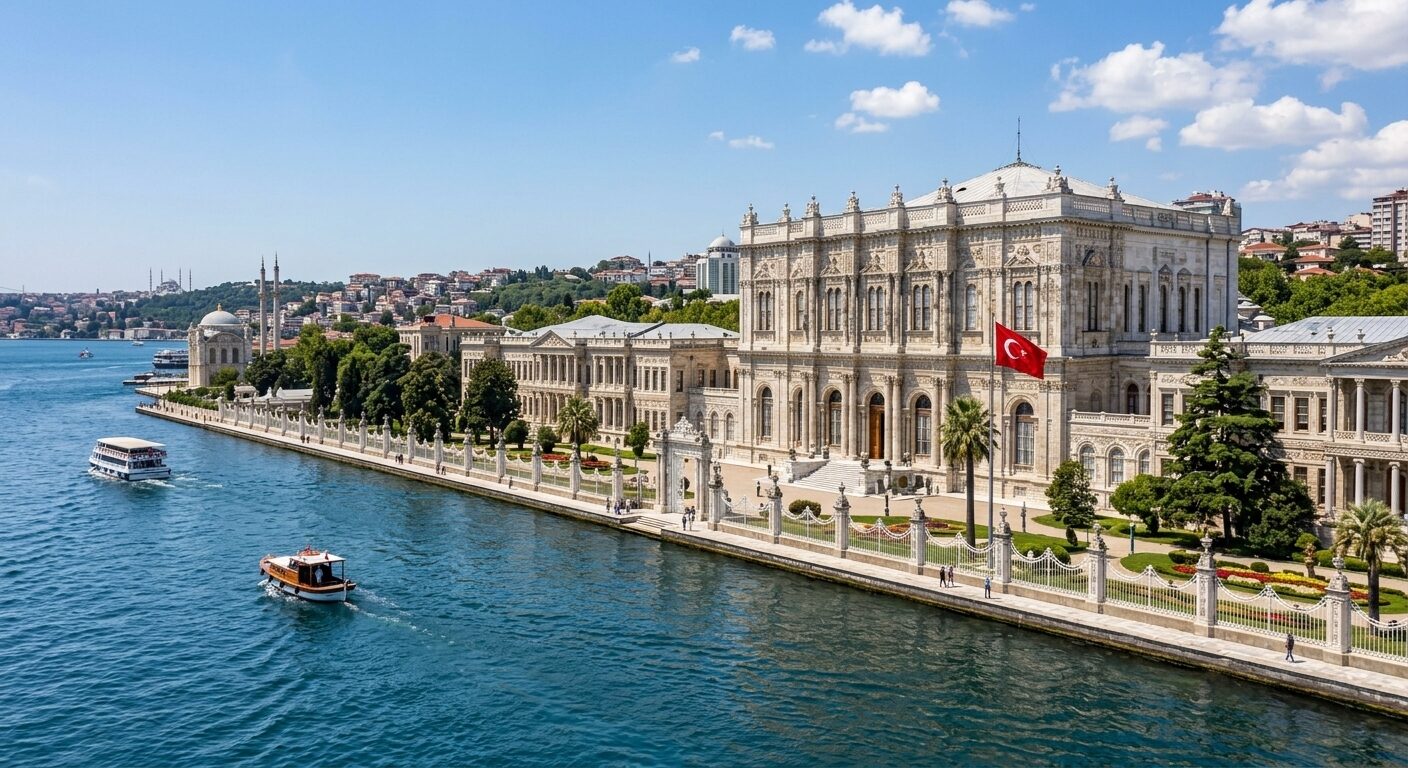
Istanbul is a city where East meets West, and nowhere is this blend of contrasts and cultures more vivid than at Dolmabahçe Palace (Dolmabahçe Sarayı), built on the shores of the Bosphorus Strait. Deservedly called Turkey's "Versailles," this grand residence is not merely an architectural masterpiece—it is a story of ambitious aspirations, the decline of an empire, and the birth of a modern nation.
Let’s take a journey through time to explore why Dolmabahçe remains one of Turkey's most popular attractions and how attitudes toward this coastal jewel have evolved over the centuries.
History: How a Filled Bay Became a Sultan's Residence
Before the palace was constructed, the site was a natural bay used by the Ottoman fleet for anchoring ships. In the 17th century, the bay was gradually reclaimed with soil to create a lush royal garden. The palace’s name originates from this process: in Turkish, dolma means "filled" and bahçe means "garden."
Construction of Dolmabahçe Palace began in 1843 by order of the 31st Ottoman Sultan, Abdülmecid I, and was completed in 1856. Prior to this, sultans had ruled for centuries from the traditional Topkapı Palace (Topkapı Sarayı), known for its Oriental wooden architecture and secluded courtyard system.
However, by the mid-19th century, the Ottoman Empire sought to prove to European powers that it was equal in modernization and style. The Sultan desired a modern, European-style palace complex that would reflect the empire’s grandiosity and openness to the Western world.
Architecture: Harmony of Ottoman and European Styles
Dolmabahçe Palace is a stunning architectural example of traditional Ottoman layout blended with European Baroque, Rococo, and Neoclassical elements. The construction was led by the prominent Armenian father-and-son architects Garabet and Nigoğayos Balyan.
Spanning an area of approximately 45,000 square meters, the palace contains 285 rooms, 46 reception halls, 6 traditional Turkish baths (hamams), and 68 restrooms.
No expense was spared on the interior decoration. Over 14 tons of gold and 40 tons of silver were used just to gild the ceilings. The floors are covered with hundreds of handmade Hereke carpets, while the walls feature paintings by world-renowned masters, including Ivan Aivazovsky.
One of the most impressive features of the palace is the Grand Ceremonial Hall (Muayede Salonu). At its center hangs the world's largest Bohemian crystal chandelier, presented to the Sultan by Queen Victoria of the United Kingdom. This massive chandelier weighs 4.5 tons and features 750 bulbs.
Turkish Attitudes Toward the Palace: From Outrage to National Pride
The perception of Dolmabahçe Palace within Turkish society has undergone dramatic shifts from the Ottoman era to modern times.
During the Ottoman Empire: Financial Burden and Alienation
When the palace was built, its cost reached approximately 5 million Ottoman gold coins (equivalent to a quarter of the empire's annual tax revenue). To fund the project, the state was forced to take massive foreign loans. These enormous expenses contributed heavily to state bankruptcy and accelerated the financial collapse of the "Sick Man of Europe," as the empire was then called.
Ordinary citizens and conservative circles viewed the palace with skepticism and outrage. To them, it symbolized the rulers' excessive extravagance, detachment from the people, and blind imitation of Western fashion at the expense of ancestral traditions.
During the Republic: Historical Re-evaluation
With the foundation of the Republic of Turkey in 1923, the monarchy was abolished, and the palace became state property.
Today, Dolmabahçe no longer symbolizes imperial collapse to the Turkish people. It has become a source of national pride and heritage—a place where the legacy of imperial history meets the origin story of the modern republic.
Dolmabahçe Palace Today: Practical Information for Visitors
Today, Dolmabahçe is a state museum visited by millions of tourists annually. The palace complex is divided into three main sections: Mabeyn-i Hümayun (Administrative and official reception quarters), Muayede Salonu (Ceremonial Hall), and the Harem (Private quarters of the Sultan's family).
The palace is located in the Beşiktaş district along the Bosphorus coast. The easiest way to get there is by taking the T1 tram line to the Kabataş terminus, followed by a 5-minute walk. The museum is open to visitors from Tuesday to Sunday (09:00 AM to 06:00 PM) and is closed on Mondays. Due to high demand, purchasing tickets online or arriving early in the morning is recommended to avoid long queues.
Dolmabahçe Palace is a must-visit destination when exploring Istanbul. It offers a chance not only to admire 19th-century luxury and architectural mastery but also to gain a deeper understanding of Turkey's journey from a grand sultanate to a modern republic.